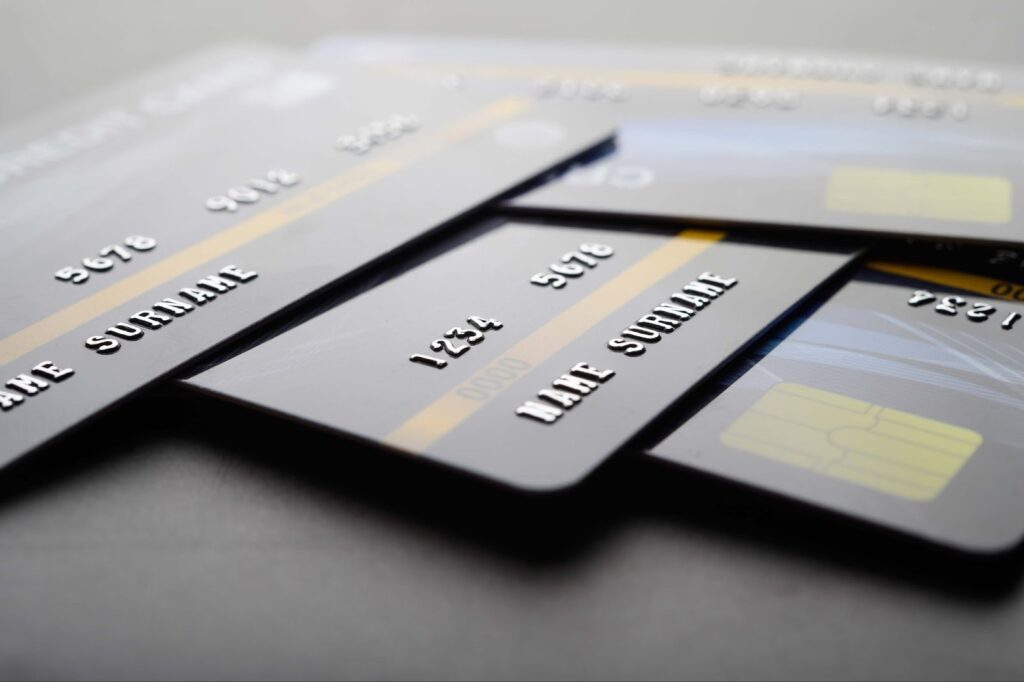
Welcome to the fascinating world of credit cards! If you’re someone who’s curious about the little piece of plastic that wields immense purchasing power, you’ve come to the right place. In this comprehensive guide, we’ll delve into the nitty-gritty details of understanding the it’s size, a seemingly simple aspect that holds intriguing insights.
You might be wondering why we’re dedicating an entire article to something as seemingly mundane as the size of a credit card. Well, my friend, there’s more to it than meets the eye. They have evolved significantly since their inception, and every little detail has been carefully designed for practicality, security, and global usability.
From the standard dimensions of a card to explore the reasons behind the shape, size, and materials used. Not only that, but we’ll also shed light on the technology packed into these tiny cards that make seamless transactions possible.
What Constitutes the Size of a Credit Card?
The payment card is designed to be conveniently sized, resembling a standard card deck. Its dimensions are usually around 3.375 inches (85.60 mm) in width and 2.125 inches (53.98 mm) in height, making it a compact and easily manageable piece of plastic. This standard size allows it to fit comfortably in wallets, purses, and cardholders without taking up too much space.
While the width and height are relatively standardized, the thickness of it can differ slightly between different issuers or types. Generally, these cards are manufactured to have a thickness of approximately 0.029 inches (0.76 mm). This thickness strikes a balance between being sturdy enough to withstand regular use and handling.
The plastic money is deliberately designed to have specific dimensions, ensuring its compatibility with various card swipe machines (PoS) and ATMs worldwide. These dimensions are standardized and regulated by the International Organization for Standardization (ISO), commonly referred to as the ISO/IEC 7810 ID-1 size. Thanks to this uniformity, users can confidently use their credit cards in different payment terminals and banking machines without encountering any fitting issues.
While the physical size of the plastic remains constant, the appearance and features may differ significantly based on the issuing institution. Issuers have the creative freedom to personalize the design, color schemes, and materials used in crafting. Additionally, they can decide on the placement of essential elements, such as the credit card numbers, cardholder’s name, and expiration date.
These variations are not mere aesthetic choices; they serve a crucial purpose in identifying each individual’s payment card. With millions of credit cardholders worldwide, having distinctive designs helps users easily differentiate their plastic from others in their possession. Moreover, unique color combinations and visual elements enhance the card’s security, making it more challenging for potential fraudsters to counterfeit or misuse it.
Here are the standardized dimensions for all types of credit cards, listed in both millimeters and inches:
| Dimension | Imperial (inches) | Metric (mm) |
|---|---|---|
| Width | 3.375 | 85.60 |
| Height | 2.125 | 53.98 |
| Thickness | 0.029 | 0.76 |
Weight of Credit Cards
The dimensions in height and width are identical, but the weight may vary. This discrepancy in weight is due to the different types of cashless card available. Naturally, metals are significantly heavier than their plastic counterparts.
For instance, the “American Express Platinum Card” weighs 17.5 grams, whereas an all-plastic only weighs 5 grams. However, regardless of the material, all of these share the same thickness, which is 0.76 mm.
Why do credit cards share a uniform size?
The International Organization for Standardization (ISO) plays a pivotal role in shaping standards across various industries, ensuring consistency and compatibility worldwide. One area where these standards have had a significant impact is the dimensions of bank cards. While the original concept was to create a convenient payment method that could easily fit into wallets, modern plastics are now required to meet specific size guidelines established by ISO in collaboration with the International Electrotechnical Commission (IEC).
Within the realm of banking cards, encompassing credit cards, debit cards, and ATM cards, they all fall under the ID-1 category. This category stipulates that they should adhere to a uniform size of 85.6 mm x 53.98 mm or 3.375 × 2.125 inches. Such standardization ensures that these cards can be used interchangeably in various readers and payment processing systems across the globe, promoting seamless transactions and enhancing user experience.
Despite the evolution of bank cards over the years, the dimensioning requirements have remained consistent. This steadfast adherence to size standards ensures that it can be easily recognized and processed by automated machines, ATMs, and electronic payment systems, regardless of the issuing bank or financial institution.

It’s important to note that while the physical dimensions have remained constant, the technology behind credit cards is continually advancing. To maintain security and keep up with changing times, the data on it, such as the numbers, magnetic stripes, and embedded chips, are frequently updated. These ongoing enhancements bolster the card’s security features and make them more resistant to fraud and unauthorized access, providing cardholders with peace of mind when conducting transactions.
What is the material utilized in the production of bank cards?
The majority available today are constructed from plastic, commonly known as PVC (polyvinyl chloride). PVC is a combination of vinyl acetate and vinyl chloride polymers. It is a sturdy and flexible material that resists water, making it an excellent choice for payment cards, as it can endure frequent and rigorous usage.
Security features of payment cards
Being closely associated with your financial resources, would be denied if any security discrepancies or errors are detected. However, this isn’t the actual scenario. They are equipped with intricate security mechanisms to curb fraudulent activities. These protective measures comprise the account number of the card, signature panel, magnetic strip, and PIN.
Today’s plastic cards possess unique attributes that are challenging to replicate, like sophisticated holograms, Personal Identification Number (PIN) and Card Verification Value (CVV) serve as crucial safety measures, and it is essential to maintain their confidentiality.
Size of a contactless credit card
In recent years, contactless credit cards have operated wirelessly without the need for physical contact, using Radio-Frequency Identification (RFID) technology for transactions. Nonetheless, they maintain the same dimensions as standard plastic, ensuring compatibility with all types of card reader machines.
FAQ
They are typically made of several layers of plastic laminated together. The core is commonly made from a plastic resin known as polyvinyl chloride acetate (PVCA). This is then layered with clear plastic, and sometimes, for added security, embedded with a microchip.
The chip technology, also known as EMV (Europay, MasterCard, and Visa), is considered the top security feature on a payment card. It creates a unique transaction code each time you use it, making it significantly more secure against fraud compared to traditional magnetic stripe cards.
Conclusion
Bank cards, utilized both domestically and internationally, have universally standardized dimensions to ensure compatibility with swipe machines worldwide. While traditional cards are inserted or swiped, recent advances now allow for contactless transactions using Radio-Frequency Identification (RFID) technology, where it simply needs to be near the reader to communicate transaction data.